Florida’s business landscape has undergone a dramatic transformation over the past two decades, fundamentally altering how Sunshine State enterprises operate, scale, and innovate. From the bustling ports of Miami and Jacksonville to the aerospace industries of the Space Coast, from Central Florida’s tourism powerhouses to the financial services firms dotting the I-4 corridor, a critical shift from traditional local computing infrastructure to cloud-based architectures is reshaping competitive dynamics across every sector. This transition has not merely changed where data is stored and processed; it has catalyzed entirely new paradigms of business operation, with artificial intelligence agents and assistants emerging as powerful catalysts for enterprise transformation. For Florida businesses—whether family-owned restaurants in Tampa, agricultural operations in the Everglades, healthcare providers in Jacksonville, or tech startups in Miami’s burgeoning innovation district—understanding the distinctions between these computing models and recognizing how cloud infrastructure enables sophisticated AI capabilities is essential for maintaining competitive advantage in an increasingly digital economy.
Local Computing: The Traditional Foundation
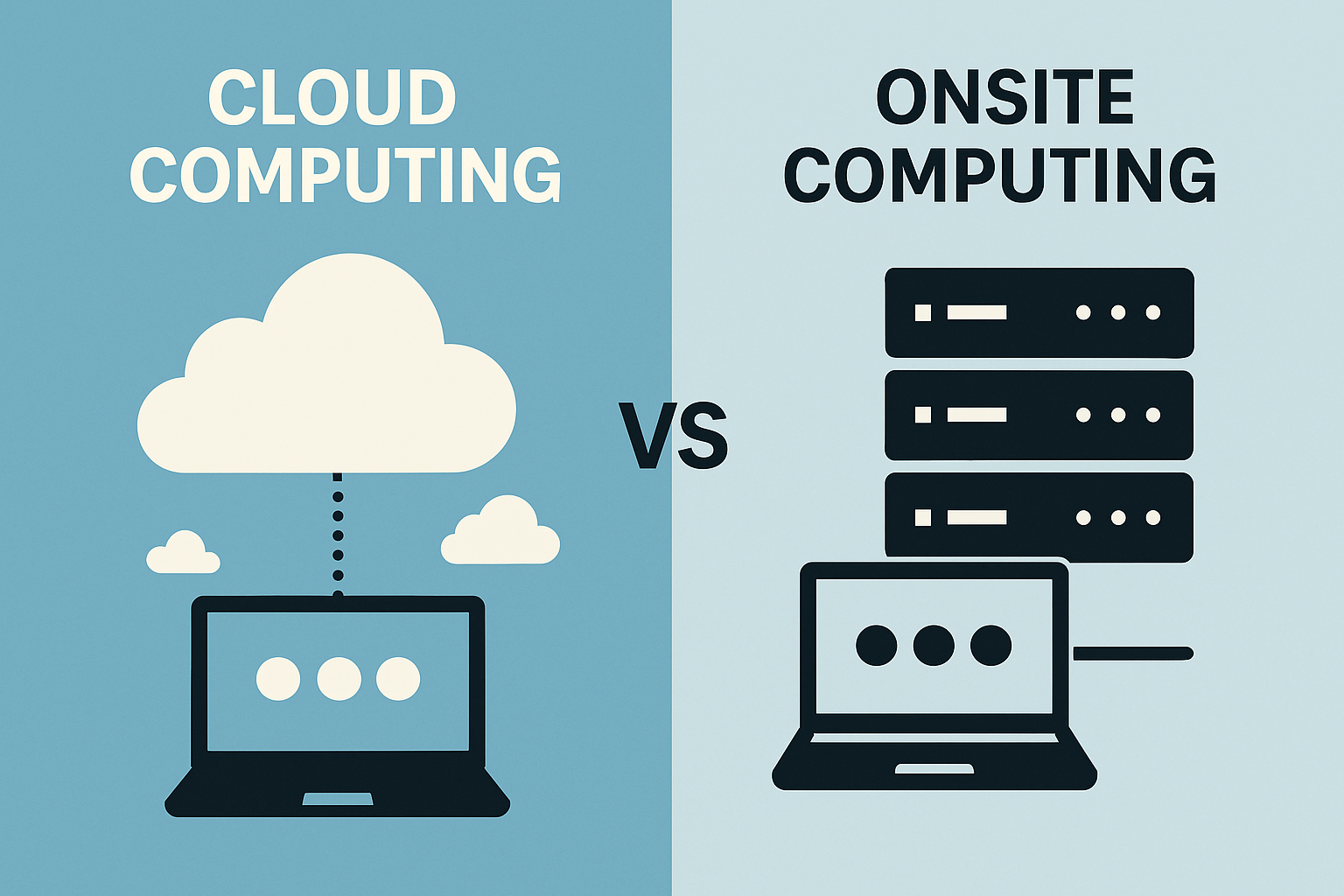
Local computing, often referred to as on-premises computing, represents the traditional model where all computational resources, data storage, and processing power reside within an organization’s physical premises. In this architecture, Florida businesses invest in their own servers, networking equipment, storage systems, and the physical infrastructure required to house and maintain these assets. The organization’s IT department assumes full responsibility for hardware procurement, software installation, system maintenance, security implementation, and ongoing upgrades.
For Florida businesses, this model has historically offered certain advantages that remain relevant for specific use cases. A medical practice in Orlando maintains direct physical control over patient records, which can be crucial given healthcare’s stringent HIPAA compliance requirements. A manufacturing facility in Fort Myers might prefer local systems that can operate independently during the hurricane season when internet connectivity becomes unreliable. A law firm in Tallahassee handling sensitive government contracts may require the physical security that on-premises infrastructure provides.
However, local computing presents significant limitations that become increasingly problematic for Florida businesses operating in today’s fast-paced environment. The scalability challenges prove particularly acute for seasonal operations—theme parks experiencing summer rushes, beach hotels managing spring break bookings, or agricultural distributors handling harvest season demands must size their infrastructure for peak periods, resulting in expensive hardware sitting idle during slower months. A restaurant chain expanding from South Florida to the Panhandle faces lengthy hardware procurement cycles and complex installation processes for each new location. Florida’s small and medium-sized businesses, which form the backbone of the state’s economy, often find the substantial capital requirements and ongoing maintenance costs create barriers to adopting cutting-edge technologies, leaving them vulnerable to disruption by more agile competitors or out-of-state chains with deeper pockets.
Geographic limitations prove especially challenging in a state as physically expansive as Florida, where businesses routinely operate across regions separated by hundreds of miles. A citrus grower managing groves from Indian River to Polk County struggles to access systems remotely, complicating real-time decision-making about irrigation, harvesting, and distribution. Healthcare networks serving both urban centers and rural communities find that local systems restrict care coordination across facilities.
Perhaps most critically for Florida businesses, the hurricane risk and environmental factors unique to the state expose on-premises infrastructure to significant vulnerabilities. Businesses along the coast face the constant threat of catastrophic hardware loss during major storms. The humidity and salt air common in coastal regions accelerate hardware degradation. Power reliability issues, particularly acute during summer storm season, can disrupt operations at critical moments.
Cloud Computing: A Paradigm Shift for the Sunshine State
Cloud computing represents a fundamental reimagining of how computational resources are delivered, consumed, and managed—one that addresses many challenges uniquely relevant to Florida enterprises. Rather than owning physical infrastructure vulnerable to hurricanes, flooding, or power outages, organizations access computing power, storage, and services over the internet from providers like Amazon Web Services (which maintains significant infrastructure in Virginia but serves Florida businesses seamlessly), Microsoft Azure, or Google Cloud Platform. These providers maintain massive data centers with redundancy and disaster recovery capabilities far exceeding what individual Florida businesses could achieve independently.
The cloud computing model encompasses several service layers, each providing different levels of abstraction and control. Infrastructure as a Service (IaaS) offers virtualized computing resources, allowing a Tampa logistics company to rent virtual machines and storage without managing physical hardware. Platform as a Service (PaaS) provides a complete development and deployment environment, enabling a Miami fintech startup to focus on application creation rather than infrastructure management. Software as a Service (SaaS) delivers fully functional applications over the internet, allowing a Key West boutique hotel to use sophisticated reservation and revenue management systems without IT staff.
For Florida businesses specifically, the advantages of cloud computing extend far beyond simple cost considerations. Elastic scalability proves transformative for the state’s heavily seasonal economy. A Destin beach rental company can scale up computing resources to handle the intense summer booking period, then scale back during slower winter months, paying only for what’s consumed. Universal Studios or Disney can handle massive traffic spikes during peak vacation weeks without maintaining excess infrastructure year-round. A Jacksonville port logistics operation can flex capacity during busy shipping seasons without capital expenditure.
Global accessibility enables Florida’s internationally connected business community to operate efficiently across borders. Miami’s position as the gateway to Latin America means businesses routinely coordinate with partners in Colombia, Brazil, Argentina, and throughout the Caribbean. Cloud platforms allow seamless collaboration regardless of geographic location. A Florida agricultural exporter can provide real-time inventory visibility to buyers in South America, Europe, and Asia simultaneously.
The operational expenditure model particularly benefits Florida’s small business community, which represents 99.8% of the state’s employers. Instead of large upfront capital investments that strain cash flow, businesses pay monthly for cloud services, preserving capital for growth, hiring, and market expansion. A food truck operation in Fort Lauderdale can access the same sophisticated point-of-sale and inventory management capabilities as major restaurant chains, paying only for what they use as they grow.
Hurricane resilience and business continuity capabilities make cloud computing especially valuable for Florida enterprises. When Hurricane Ian devastated Southwest Florida in 2022, businesses relying on local servers faced catastrophic data loss and extended downtime. Cloud-based businesses continued operating from temporary locations or employees’ homes, with data safely replicated across geographically dispersed data centers. A Fort Myers accounting firm using cloud systems could serve clients without interruption even while their physical office remained damaged for months. A Panama City retailer hit by Hurricane Michael maintained all transaction records, customer data, and inventory information despite complete destruction of their physical store.
Cloud infrastructure also democratizes access to sophisticated technologies that would be prohibitively expensive for most Florida businesses to implement locally. A small medical practice in Gainesville can leverage advanced analytics previously available only to large hospital systems. A family-owned marina in the Keys can implement inventory optimization tools comparable to those used by major marine retailers. This democratization levels the competitive playing field, enabling Florida’s entrepreneurial spirit to flourish without the traditional constraints of capital limitations.
The reliability and redundancy built into cloud infrastructure surpass what most individual organizations could achieve independently. A South Florida commercial real estate firm doesn’t worry about backup power systems, cooling redundancy, or network failovers—cloud providers handle these concerns with enterprise-grade solutions. Sophisticated disaster recovery capabilities that would require substantial investment in a local environment become standard features in cloud deployments.
Cloud Computing as the Essential Foundation for AI Agents
The emergence of powerful AI agents and assistants as transformative business tools is inextricably linked to cloud computing infrastructure. For Florida businesses seeking to compete regionally, nationally, and internationally, this connection is crucial to understand. Cloud computing provides several critical enablers that make sophisticated AI applications practical and accessible for enterprises throughout the Sunshine State.
The computational requirements of modern AI systems, particularly large language models and complex machine learning algorithms, are extraordinary. Training these models demands massive parallel processing capabilities, often requiring thousands of specialized processors working in concert for extended periods. A University of Florida research institution developing AI for precision agriculture needs access to powerful computing clusters. A Tampa Bay healthcare network training models to predict patient deterioration requires substantial processing power. Cloud platforms provide access to specialized hardware like GPUs, TPUs, and AI-optimized chips that would be economically unfeasible for Florida organizations to maintain locally. A Jacksonville financial services firm can provision these resources precisely when needed for fraud detection model training, then release them when tasks complete, paying only for actual usage rather than maintaining expensive hardware that sits idle.
The data requirements for effective AI systems present another challenge that cloud computing addresses elegantly. Machine learning models improve with access to larger, more diverse datasets. For a Florida hospitality company operating properties from Pensacola to Key West, cloud storage provides virtually unlimited capacity to aggregate data from all locations—booking patterns, guest preferences, seasonal trends, operational metrics—and make it accessible for model training. A Florida agricultural cooperative can combine data from thousands of growers, weather stations, soil sensors, and market prices to develop sophisticated yield prediction and pricing optimization models that no individual farm could create alone.
Modern AI agents don’t operate in isolation; they require integration with numerous services, databases, APIs, and external systems to deliver value. Cloud environments excel at facilitating these integrations through standardized protocols, managed services, and extensive ecosystem support. A Miami-based logistics company’s AI agent might need to simultaneously access warehouse management systems, carrier APIs, port authority databases, customs information systems, and weather services to optimize shipping routes and delivery schedules. A Florida healthcare network’s AI assistant needs to integrate with electronic health records, insurance verification systems, pharmacy databases, lab result platforms, and patient communication tools. Cloud platforms provide the networking infrastructure, API management tools, and security frameworks necessary to orchestrate these complex interactions reliably.
The iterative nature of AI development, where models undergo continuous refinement and improvement, aligns perfectly with cloud computing’s flexibility. Data scientists at Florida International University or the University of Central Florida can experiment with different algorithms and approaches using cloud resources, rapidly prototyping and testing without waiting for hardware procurement. When a model proves effective—perhaps predicting red tide events or optimizing theme park wait times—deploying it to production environments becomes straightforward through cloud-native tools and services.
Cloud platforms have also developed specialized AI and machine learning services that dramatically reduce the technical expertise required to build AI-powered applications. These managed services handle infrastructure provisioning, model training orchestration, deployment automation, and scaling, allowing Florida businesses to focus on defining problems and interpreting results rather than managing technical complexity. A Sarasota marketing agency can leverage natural language processing APIs to analyze social media sentiment about local tourism. A Lakeland manufacturing company can use computer vision services to automate quality inspection without hiring computer vision specialists.
The security and compliance considerations surrounding AI systems, which must protect sensitive data while adhering to regulatory requirements, benefit from the substantial investments cloud providers make in these areas. For Florida businesses operating under various regulatory frameworks—healthcare providers under HIPAA, financial institutions under banking regulations, government contractors under federal security requirements—cloud platforms offer encryption, access controls, audit logging, and compliance certifications that individual organizations would struggle to implement comprehensively.
AI Agents and Assistants: Transforming Florida Business Operations
With cloud computing providing the essential foundation, AI agents and assistants emerge as powerful tools capable of transforming business operations across virtually every industry represented in Florida’s diverse economy. These intelligent systems go beyond simple automation, bringing reasoning capabilities, natural language understanding, contextual awareness, and adaptive learning to business processes throughout the Sunshine State.
Tourism and Hospitality: Florida’s Economic Engine
Florida’s tourism industry, which welcomed 137.6 million visitors in 2022 and supports millions of jobs, stands to benefit enormously from AI agents. Intelligent chatbots and virtual assistants can handle the vast volumes of customer inquiries that flood hotels, theme parks, and attractions, providing instant responses in multiple languages—essential given Florida’s international visitor base. A Miami Beach resort implements an AI assistant that answers questions about amenities, local attractions, dining options, and booking modifications in English, Spanish, Portuguese, French, and German simultaneously, providing 24/7 service without the cost of multilingual staffing around the clock.
Theme parks leverage AI agents to personalize guest experiences at scale. These systems analyze visitor behavior, ride preferences, past visits, and real-time crowd patterns to deliver tailored recommendations through mobile apps. An AI agent might suggest optimal touring strategies to minimize wait times, recommend dining options matching dietary preferences, or alert guests to character meet-and-greets featuring their favorite characters. Dynamic pricing engines adjust ticket prices, hotel rates, and dining reservations in real-time based on demand, competition, weather forecasts, and event calendars, maximizing revenue during peak periods while driving traffic during slower times.
Agriculture: Feeding the Nation with AI Intelligence
Florida’s agricultural industry, producing citrus, vegetables, cattle, and nursery products worth billions annually, faces complex challenges around weather variability, pest management, labor costs, and market dynamics. AI agents provide powerful tools for addressing these challenges.
Precision agriculture systems analyze data from soil sensors, weather stations, satellite imagery, and crop health monitors to provide recommendations on irrigation, fertilization, and pest control tailored to specific field conditions. A strawberry grower in Plant City receives alerts when AI detects early signs of disease in specific field sections, enabling targeted treatment before widespread crop damage occurs. Yield prediction models help growers and distributors plan harvests, coordinate transportation, and negotiate with buyers based on data-driven forecasts rather than guesswork.
AI agents optimize supply chain operations for perishable products where timing is critical. The system coordinates harvest schedules with transportation availability, cold storage capacity, and buyer demand, minimizing spoilage while maximizing pricing. For Florida citrus exporters shipping to Asia, Europe, and other distant markets, AI agents track shipments in real-time, predict arrival times accounting for port congestion and customs delays, and alert distributors to potential issues requiring intervention.
Healthcare: Improving Care Across Florida’s Communities
Florida’s healthcare industry, serving a population exceeding 22 million including large elderly and international populations, benefits significantly from AI agents addressing everything from administrative efficiency to clinical decision support.
AI-powered systems streamline appointment scheduling, insurance verification, and patient communication for practices ranging from solo practitioners in rural communities to large health systems like Baptist Health, AdventHealth, and Tampa General. These systems understand natural language requests, access real-time availability across multiple providers and locations, verify insurance coverage, send automated reminders, and reschedule appointments when conflicts arise—all without human intervention for routine transactions.
Clinical decision support systems assist Florida physicians in diagnosing conditions, recommending treatments, and identifying patients at risk for complications. An AI agent might alert an emergency department physician in Pensacola that a patient’s symptoms and test results suggest a rare condition requiring specialist consultation. In a Tallahassee primary care practice, the system identifies patients overdue for preventive screenings, flags concerning trends in chronic disease management, and suggests evidence-based treatment adjustments.
Telemedicine platforms, increasingly important for serving Florida’s rural areas and facilitating specialist consultations across the state’s vast geography, incorporate AI agents that perform initial assessments, gather medical history, and prepare summaries for physician review. This enables physicians to focus on clinical decision-making rather than information gathering, improving efficiency and allowing specialists in Miami or Jacksonville to serve patients throughout the state effectively.
Retail and E-commerce: Serving Florida’s Diverse Markets
Florida retailers, from major department stores to independent boutiques, from national chains to local artisans selling online, leverage AI agents to personalize customer experiences and optimize operations.
AI-powered recommendation engines analyze browsing behavior, purchase history, and product preferences to suggest items customers are likely to purchase. A Jacksonville outdoor equipment retailer uses AI to recommend fishing gear to coastal customers while suggesting hiking equipment to those in North Florida. An AI agent for a Miami fashion boutique identifies customers interested in Latin-influenced styles versus those preferring classic American fashion, tailoring email campaigns and website experiences accordingly.
Inventory optimization proves particularly valuable for Florida retailers dealing with seasonal demand swings. AI systems analyze historical sales data, weather patterns, tourist arrival forecasts, and promotional calendars to predict demand by product, location, and time period. A beachwear chain with locations from Pensacola to Key West uses AI to optimize inventory distribution, ensuring popular sizes and styles are available where and when demand peaks while minimizing markdown losses on excess inventory.
Visual search capabilities allow customers to upload photos of products they’ve seen and find similar items in inventory—particularly useful for furniture stores, home décor retailers, and fashion boutiques throughout Florida serving customers seeking specific styles or aesthetics.
Real Estate and Construction: Building Florida’s Future
Florida’s booming real estate and construction sectors, driven by continued population growth and development, increasingly rely on AI agents for efficiency and competitive advantage.
Real estate firms deploy AI assistants that qualify leads through conversational interactions, gathering information about budgets, preferences, timelines, and needs before connecting prospects with appropriate agents. An AI agent for a Naples luxury real estate firm asks sophisticated questions about lifestyle preferences, desired amenities, and investment goals, matching buyers with properties and neighborhoods aligned with their criteria. The system schedules showings, provides virtual tour options, and delivers property information packets automatically.
Property valuation models incorporate data on comparable sales, neighborhood trends, school quality, proximity to amenities, and market conditions to generate accurate pricing recommendations. For investors evaluating rental properties across Florida markets—from Jacksonville to Fort Lauderdale—AI agents analyze rental rates, occupancy trends, property taxes, insurance costs, and maintenance requirements to project returns.
Construction companies use AI for project management, scheduling, and resource optimization. An Orlando general contractor’s AI system analyzes project plans, resource availability, subcontractor schedules, weather forecasts, and permit processing times to generate realistic timelines and identify potential delays before they occur. The agent automatically reoptimizes schedules when changes arise—material delivery delays, weather disruptions, or scope modifications—keeping stakeholders informed and minimizing costly overruns.
Financial Services: Protecting and Growing Florida Assets
Florida’s financial services industry, from the major banks and investment firms in Miami and Jacksonville to community banks and credit unions serving local markets throughout the state, leverages AI agents for fraud detection, customer service, and operational efficiency.
Fraud detection systems analyze transaction patterns in real-time, identifying suspicious activity that merits investigation. For Florida financial institutions dealing with high volumes of international transactions through Miami or complex real estate transactions statewide, AI agents detect anomalies suggesting money laundering, identity theft, or payment fraud. The systems adapt continuously, learning from new fraud schemes and reducing false positives that frustrate legitimate customers.
AI-powered chatbots and virtual assistants handle routine customer inquiries—balance checks, transaction history, bill payments, account changes—through mobile apps and websites, providing instant service without wait times. When customers need human assistance, the AI agent gathers relevant information and context, connecting them with appropriate representatives already informed about their needs.
Credit evaluation models for community banks and alternative lenders incorporate traditional credit data alongside alternative indicators—banking transaction patterns, rental payment history, utility payment records—enabling more accurate risk assessment for borrowers with limited credit histories. This proves particularly valuable in Florida’s diverse communities where significant immigrant populations may lack extensive U.S. credit records despite being creditworthy.
Logistics and Transportation: Moving Goods Across Florida and Beyond
Florida’s strategic position as a transportation and logistics hub—with major ports in Jacksonville, Tampa, Miami, and Port Everglades handling billions in trade annually—creates enormous opportunities for AI-driven optimization.
Port operations leverage AI agents for vessel scheduling, container tracking, equipment allocation, and customs coordination. An AI system at Port Miami analyzes vessel arrival forecasts, cargo manifests, available berths, crane capacity, yard space, and customs processing requirements to optimize berth assignments and cargo handling sequences, minimizing vessel wait times and maximizing throughput.
Logistics companies use AI for route optimization, load consolidation, and delivery scheduling. A Tampa-based distributor serving retail locations throughout Central Florida deploys an AI agent that considers delivery windows, traffic patterns, vehicle capacity, driver availability, and customer priorities to generate optimal delivery routes. The system dynamically adjusts routes when delays occur, customers request changes, or new urgent deliveries arise, maintaining efficiency despite constantly changing conditions.
For Florida businesses importing goods through the state’s ports, AI agents track international shipments, predict arrival times accounting for port congestion and customs delays, and alert supply chain managers to potential disruptions requiring alternative arrangements. A furniture retailer importing from Asia receives proactive notifications when vessels will arrive later than scheduled, enabling them to adjust warehouse staffing, retail promotions, and customer commitments accordingly.
Creating Custom AI Applications for Specific Florida Business Goals
While general-purpose AI tools provide value, the true transformative potential emerges when Florida organizations develop custom AI applications tailored to their specific business goals, processes, and competitive contexts. Cloud computing infrastructure makes this customization practical and accessible, even for organizations without extensive AI expertise.
Consider a Florida citrus cooperative seeking to optimize pricing and distribution across domestic and international markets. A custom AI application integrates weather data affecting grove conditions, harvest timing predictions, quality assessments from packinghouse sensors, freight rates and shipping availability, import regulations and tariffs for various countries, historical pricing data across markets, and competitor supply information. The system generates pricing recommendations by market and customer segment, suggests optimal shipment timing and routing, alerts managers to opportunities created by supply disruptions elsewhere, and predicts demand by destination and time period. This tailored solution addresses the specific varieties, customers, logistics constraints, and competitive context that the cooperative faces—capabilities generic tools cannot provide.
A Florida theme park develops a custom AI agent to enhance guest experience while optimizing operations. The system analyzes real-time data from ride systems, mobile app usage, point-of-sale transactions, weather conditions, and historical attendance patterns. The AI generates dynamic ride wait time predictions displayed through the mobile app, personalized attraction recommendations based on individual guest preferences and current wait times, optimal dining suggestions considering reservation availability and location, and dynamic staffing recommendations ensuring adequate coverage at high-traffic locations. The system learns from each operating day, improving predictions and recommendations as it processes more data specific to that park’s unique attractions, layout, and guest demographics.
A Jacksonville healthcare network creates a custom AI application for emergency department operations. The system integrates patient arrival data and chief complaints, electronic health records for patients with prior visits, current bed availability throughout the hospital system, on-call specialist availability, diagnostic equipment scheduling, and historical patterns of admission rates by condition and time. The AI predicts which patients will likely require admission versus discharge, recommends diagnostic testing sequences to expedite diagnosis for time-sensitive conditions, identifies patients eligible for observation status in alternative care areas, and alerts bed management to projected admission volumes hours in advance. These capabilities reflect the specific patient population, facility capacities, and clinical protocols of that particular healthcare network.
A Miami-based import/export company develops an AI agent for customs and trade compliance. The system monitors ever-changing tariff classifications, free trade agreement requirements, customs regulations across multiple countries, sanctions and restricted party lists, and documentation requirements. The AI reviews proposed transactions against these requirements, identifies compliance issues requiring attention, recommends optimal tariff classifications to minimize duties, suggests alternative sourcing or routing strategies when regulations make direct approaches problematic, and generates required documentation automatically. This application addresses the specific product categories, countries, and compliance challenges relevant to that company’s business.
Enterprise AI Agents: Meeting Specific Goals for Florida Organizations
As AI capabilities mature, Florida enterprises increasingly deploy sophisticated AI agents designed to achieve specific strategic objectives. These agents go beyond single-purpose tools, acting as intelligent systems that can reason across multiple data sources, coordinate activities, and autonomously execute complex workflows toward defined goals.
Hurricane Preparedness and Business Continuity
For Florida businesses, hurricane preparedness represents an annual imperative with potentially catastrophic consequences for inadequate planning. Enterprise AI agents provide sophisticated capabilities for preparation, response, and recovery.
A hurricane preparedness agent continuously monitors weather forecasts from multiple sources, tracking systems developing in the Atlantic and Gulf of Mexico. As storms form and forecast models evolve, the AI assesses potential impacts on specific business locations, supply chains, and operations. The agent triggers preparedness protocols at appropriate thresholds—securing outdoor equipment, backing up critical data, adjusting inventory levels, modifying staffing schedules, and communicating with customers about potential service disruptions. The system coordinates with vendors to accelerate deliveries of critical supplies, reschedule non-essential deliveries, and arrange backup suppliers if primary sources face disruption.
During and after storms, the AI agent coordinates damage assessment by analyzing satellite imagery, utility outage maps, and reports from on-site personnel to prioritize recovery efforts. The system manages communication with customers, employees, vendors, and insurance providers, providing status updates and estimated recovery timelines. For a retail chain operating throughout Florida, this agent determines which locations can reopen quickly, which require repairs, and which face extended closures, coordinating with contractors, adjusting inventory distribution, and managing financial implications.
Tourism and Event Optimization
Florida’s tourism economy depends on effectively attracting and serving visitors across highly seasonal patterns influenced by weather, school calendars, events, and economic conditions. AI agents help tourism businesses optimize revenue and guest satisfaction across these complex dynamics.
A revenue optimization agent for a hotel chain operating properties from Amelia Island to Key West continuously analyzes booking pace, forward demand signals, competitive pricing, events calendars, weather forecasts, and economic indicators. The system adjusts room rates dynamically by property, room type, and date, maximizing revenue per available room while maintaining target occupancy levels. The agent identifies opportunities to promote specific properties experiencing soft demand, recommends package offerings that bundle accommodations with dining or activities, and allocates promotional budgets across channels to maximize return on marketing investment.
For theme parks and attractions, a guest experience optimization agent analyzes real-time attendance, attraction wait times, dining reservation availability, show schedules, and guest behavior patterns. The system sends targeted mobile app notifications encouraging guests to experience attractions with shorter waits, offering fast-pass upgrades when specific guests show frustration with long waits, suggesting dining reservations at restaurants with immediate availability, and personalizing recommendations based on guest preferences and past behavior. The agent coordinates operational adjustments—opening additional attraction capacity, adjusting show schedules, reallocating staff—to maintain service quality during unexpectedly high attendance.
Agricultural Market Intelligence and Sales Optimization
Florida agricultural producers face complex pricing dynamics across multiple markets, varieties, quality grades, and buyer types. AI agents provide sophisticated market intelligence and sales optimization capabilities.
A market intelligence agent for a vegetable grower cooperative continuously monitors wholesale market prices across major terminals, retail pricing trends, import volumes at ports of entry, weather conditions in competing growing regions, and currency exchange rates for international sales. The system identifies optimal timing for harvesting and shipping specific products, recommends target markets offering best returns for current supply and quality, alerts to opportunities created by supply disruptions in competing regions, and predicts near-term price movements based on supply and demand indicators.
The agent negotiates with buyers by understanding each customer’s typical purchase patterns, price sensitivity, volume requirements, and quality specifications. The system generates initial offers likely to close sales efficiently while maximizing returns, suggests counteroffers when buyers propose lower prices, and recommends strategic concessions—volume discounts, extended payment terms, shared logistics costs—to close deals with important customers. Throughout the season, the AI tracks actual results against predictions, continuously refining its understanding of market dynamics relevant to that specific cooperative’s products and customer base.
Healthcare Population Health Management
Florida healthcare organizations increasingly accept financial risk for patient outcomes through value-based care arrangements. AI agents help manage population health by identifying at-risk patients and coordinating preventive interventions.
A population health agent analyzes claims data, electronic health records, pharmacy utilization, emergency department visits, and social determinants of health for entire patient populations. The system identifies patients at high risk for expensive outcomes—diabetics with poor control at risk for complications, heart failure patients at risk for hospitalizations, patients with multiple chronic conditions and poor medication adherence. The agent generates prioritized intervention lists for care management teams, recommends specific outreach strategies based on each patient’s barriers to care, coordinates appointment scheduling with relevant specialists and services, and tracks whether interventions achieve desired outcomes.
For an accountable care organization serving communities across Central Florida, this agent identifies geographic areas and demographic segments experiencing worse outcomes than benchmarks, recommends community-level interventions addressing identified barriers, and measures effectiveness of programs targeting specific conditions or populations. The system helps the organization meet quality metrics required for shared savings while genuinely improving health outcomes for patients.
Real Estate Market Analysis and Investment Strategy
Florida’s dynamic real estate markets, characterized by rapid population growth, significant international investment, and location-specific factors ranging from beach access to hurricane exposure, create both opportunities and risks for investors and developers. AI agents provide sophisticated market analysis and investment guidance.
A market intelligence agent for a real estate investment firm analyzes property transactions, rental rates, occupancy trends, new construction permits, employment data, demographic trends, school ratings, transportation developments, and regulatory changes across Florida markets from Pensacola to Key West. The system identifies emerging markets offering attractive risk-adjusted returns before they become widely recognized, flags markets showing signs of overheating where caution is warranted, recommends optimal property types and locations for new investments, and predicts near-term trends in rental demand and pricing.
For properties already owned, the agent optimizes operations by recommending rental rate adjustments based on market conditions and property performance, identifying renovation opportunities likely to generate positive returns, suggesting optimal timing for property disposition, and flagging properties underperforming benchmarks for detailed review. The agent considers factors unique to Florida real estate—hurricane risk, flood insurance costs, seasonal rental demand, international buyer activity—that generic real estate tools miss.
Implementation Considerations for Florida Businesses
Successfully deploying AI agents to transform business operations requires careful attention to several critical factors beyond technical implementation. Florida organizations must approach AI adoption strategically, recognizing that technology alone cannot guarantee success.
Data Quality and Infrastructure Readiness
Many Florida businesses, particularly small and medium-sized enterprises and family-owned operations, may lack the digital infrastructure and data management practices necessary to support sophisticated AI applications. A family restaurant that’s operated successfully for decades using paper-based systems and point-of-sale terminals that don’t integrate with other systems faces a significant journey before AI agents can deliver value.
Organizations should assess their current state realistically before pursuing AI initiatives. This includes evaluating whether critical business data exists in digital form, whether data quality is sufficient for meaningful analysis, whether systems can share data effectively, and whether the organization has personnel capable of managing AI initiatives. For many Florida businesses, foundational work improving data practices and system integration must precede AI implementation.
However, Florida’s strong technology support ecosystem—universities like University of Florida, Florida State University, and University of Central Florida producing talented graduates; growing technology hubs in Miami, Tampa, and Orlando; and increasing presence of technology companies and consulting firms—provides resources for businesses needing assistance with this digital transformation journey.
Hurricane and Disaster Resilience Considerations
Florida-specific implementation considerations include ensuring AI systems remain accessible and functional during hurricanes and other disasters that interrupt power and internet connectivity. Organizations should implement mobile connectivity backups, ensure critical AI capabilities can operate with degraded internet performance, design agent functionality to gracefully handle extended periods without system access, and establish manual fallback processes for situations when AI systems are unavailable.
Cloud-based AI systems provide inherent advantages here, as data and functionality remain accessible from any location with internet connectivity. A Tampa business whose facility loses power during a hurricane can continue accessing AI tools from generators-powered temporary locations, employees’ homes, or even other states.
Bilingual and Multicultural Capabilities
Florida’s cultural diversity and significant Spanish-speaking population create requirements that AI implementations must address. Many Florida businesses serve customers who prefer Spanish communication, and some serve Haitian Creole, Portuguese, or other language populations. AI agents should support multilingual interactions, understand cultural preferences that influence communication styles and decision-making, and recognize that “Florida” means different things to different populations—retirees from the Northeast, Latin American immigrants, multigenerational Floridians, and seasonal visitors each have distinct needs and perspectives.
Organizations implementing customer-facing AI should ensure systems handle language switching seamlessly, maintain context when customers move between languages, understand cultural references and holidays relevant to communities served, and escalate to bilingual human representatives when language complexity exceeds AI capabilities.
Regulatory and Compliance Considerations
Florida businesses operate under various regulatory frameworks depending on their industry. Healthcare organizations must comply with HIPAA requirements governing patient data privacy. Financial institutions face banking regulations and anti-money laundering requirements. Agriculture operations must meet food safety standards. Real estate firms must follow fair housing laws. AI implementations must incorporate these compliance requirements from the outset rather than as afterthoughts.
Cloud platforms typically provide compliance certifications—HIPAA, PCI-DSS, SOC 2—that address many requirements, but organizations remain responsible for how they configure and use systems. Florida businesses should engage legal and compliance counsel when implementing AI in regulated industries, ensuring data handling practices, decision-making processes, and documentation meet applicable standards.
Change Management in Family and Long-Tenured Organizations
Many Florida businesses are family-owned enterprises or have long-tenured employees who’ve worked together for decades using established processes. Introducing AI agents represents significant organizational change that requires careful management to avoid resistance and ensure adoption.
Successful Florida organizations involve employees in AI planning and implementation, explaining how AI augments rather than replaces human capabilities, providing training and ongoing support as employees learn new tools, celebrating successes and acknowledging challenges honestly, and maintaining open channels for feedback and concerns. A multigenerational family business might engage senior family members as AI champions who help other employees understand benefits and overcome resistance.
The Competitive Imperative for Florida Enterprises
The transformation enabled by cloud computing and AI agents represents more than an operational improvement opportunity for Florida businesses; it’s increasingly a competitive imperative. Organizations throughout the Sunshine State that successfully leverage these technologies gain advantages that compound over time, while those that delay face growing disadvantages.
Competing with National Chains and Online Retailers
Florida’s independent businesses face intense competition from national chains and online retailers with sophisticated technology and extensive resources. A family-owned hardware store in a Florida community competes with Home Depot, Lowe’s, Amazon, and other giants possessing advanced inventory management, dynamic pricing, and personalized marketing capabilities. Cloud-based AI tools enable independents to implement comparable capabilities at affordable costs, competing on personalization, local knowledge, and service quality while matching the operational efficiency that previously gave chains insurmountable advantages.
Attracting and Retaining Talent
Florida’s growing technology sector and competition for skilled workers means businesses offering opportunities to work with modern tools and technologies attract better talent. Young professionals and digital natives gravitate toward organizations where they can develop relevant skills rather than maintaining legacy systems and manual processes. A Jacksonville logistics company implementing AI-driven optimization attracts talented operations managers who want to work with cutting-edge tools, while competitors stuck with spreadsheet-based planning struggle to fill positions.
Florida’s universities and colleges produce thousands of graduates annually with technology skills, but many leave the state for opportunities in Silicon Valley, New York, Boston, or other technology hubs. Florida businesses that offer sophisticated technology environments can retain more of this homegrown talent, reducing the brain drain that has historically limited the state’s technology growth.
Meeting Visitor Expectations
Florida’s tourism industry faces continuously rising expectations as visitors experience seamless digital interactions at hotels, airlines, retailers, and attractions worldwide. When tourists book accommodations through apps offering instant booking confirmations, mobile check-in, personalized recommendations, and real-time service requests, they expect comparable capabilities at Florida hotels and attractions. Organizations failing to meet these expectations risk negative reviews, reduced bookings, and loss of market share to more digitally sophisticated competitors.
Climate Adaptation and Resilience
As Florida faces increasing climate-related challenges—more intense hurricanes, rising sea levels, extreme heat, and changing rainfall patterns—businesses that leverage AI for adaptation and resilience gain significant advantages. Agricultural operations using AI to optimize water usage, select resilient varieties, and adapt planting schedules to changing conditions maintain productivity while others struggle. Coastal businesses implementing AI-driven hurricane preparation and recovery minimize disruption and financial losses. Real estate developers using AI to assess climate risks make better location and design decisions, avoiding expensive mistakes.
Economic Development and Community Growth
Florida communities increasingly compete to attract businesses, residents, and investment. Areas demonstrating technological sophistication and innovation attract companies seeking skilled workforces and modern business environments. A Florida city where businesses widely adopt AI and cloud technologies becomes more attractive to entrepreneurs, remote workers, and companies considering relocation or expansion. This creates virtuous cycles where technology adoption enables economic growth, which funds infrastructure and education improvements, which attract more businesses and talent.
Florida-Specific Success Stories and Use Cases
SpaceX and Florida’s Aerospace Revival
While SpaceX represents a California-based company, its massive operations at Kennedy Space Center demonstrate how cloud computing and AI enable Florida’s aerospace sector renaissance. The company’s Starlink satellite manufacturing and launch operations leverage cloud-based systems for design, testing, launch planning, and operations management. AI assists with rocket reusability—analyzing telemetry data to optimize landing approaches and assess vehicle condition. Florida’s aerospace industry, from major contractors to small suppliers, increasingly adopts similar technologies to remain competitive in this revitalized sector.
Universal Orlando Resort’s Technological Innovation
Universal Orlando has invested heavily in technology creating more personalized and seamless guest experiences. While specific AI implementations aren’t publicly detailed, the resort’s mobile app demonstrates cloud-enabled capabilities—real-time wait time information,