By Brian French, Founder and Publisher, Florida Authority Network
Brian French is founder and publisher of the Florida Authority Network and a Florida business news analyst with more than 20 years of experience as an analyst and money manager.
Quick Answer
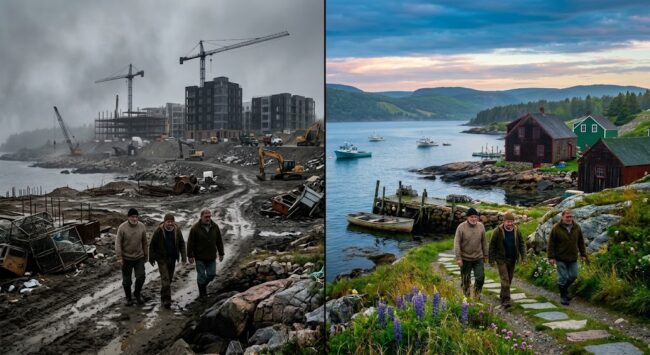
Some states, led by Maine, now treat almost any new business activity as a threat to their environment or culture. In 2026, Maine’s legislature passed the nation’s first statewide data center moratorium, even though its air and water are far cleaner than they were 50 years ago. Call it optimism scarcity. Florida starts from the opposite instinct: yes to business, on fair terms. The real danger for “no” states isn’t growth. It’s standing still.
The State That Said No First
Most states spent 2026 competing for data centers. Maine spent it trying to keep them out.
In April, the Maine legislature passed a temporary moratorium on new data centers, the first US state to do so. The bill, LD 307, would have blocked new state approvals for data centers drawing more than 20 megawatts of grid power for 18 months, through late 2027.
Here is the strange part. Maine barely has a data center industry to restrain. Industry tracker Baxtel counts 12 data center sites in the state, mostly small facilities around Portland and Brunswick. The largest one operating, in Portland, draws just 3 MW. The legislature voted to stop something that had hardly started.
Governor Janet Mills vetoed the bill on April 24, but she did not exactly roll out a welcome mat. She signed LD 713, which bars data center projects from Maine’s business development tax incentive programs. The industry’s verdict was blunt: the Data Center Coalition warned the moratorium would signal “that Maine is closed for business.”
So in Maine, whether to allow a data center isn’t the real debate. The emotional answer is already no. The real debates happen at a much smaller scale: one more storefront, one more curb cut, one more parking space on a summer Main Street.
The Philosophy of Permanent No
Maine isn’t alone. It leads a group of mostly Northeastern states where the default response to business is suspicion. At least a dozen states weighed moratorium or restraint bills in 2026, part of more than 300 data center bills filed across 30-plus states.
What these places share is a worldview, not a single policy. In that view, a new business is never just a business. A warehouse threatens the landscape. A big employer threatens the culture. A chain store threatens “character.” A parking lot threatens the whole idea of what the town is supposed to be.
The anthem is easy to recognize: We want to keep things the same.
That instinct feels protective, but it has a cost. When every proposal is treated as a potential disaster, the only safe choice left is to do nothing. A community that always does nothing doesn’t preserve itself. It slowly ages out.
Census estimates released in June 2026 show Maine is still the nation’s oldest state, with a median age of 44.9 years. The national median is 39.4. A place that blocks the businesses that hire young people shouldn’t be surprised when young people leave.
The Denial That Anything Got Better
The deepest problem with the “Permanent No” mindset is that it can’t admit progress. Ask a committed growth skeptic whether the environment is better today than it was 30, 50 or 100 years ago, and you’ll often hear that things are worse than ever and getting worse.
The national data says the opposite.
| Measure | Change | Period |
|---|---|---|
| Six key air pollutants, combined emissions | Down 78% | 1970–2022 |
| U.S. economy | Up 304% | 1970–2022 |
| Sulfur dioxide concentrations | Down 89% | 1990–2018 |
| Nitrogen dioxide concentrations | Down 57% | 1990–2018 |
| Carbon monoxide concentrations | Down 74% | 1990–2018 |
Source: U.S. EPA air trends reports
Between 1970 and 2022, EPA reports, combined emissions of six key pollutants fell 78% while the economy grew 304%. Read that again. America more than quadrupled its economic output and cut its main air pollutants by more than three-quarters at the same time. Growth and a cleaner environment aren’t enemies. For half a century they have moved together.
Maine Should Know This Better Than Anyone
The irony is sharpest in Maine itself.
In the 1960s and 1970s, the Androscoggin River was so polluted that it ran out of oxygen, millions of fish died, and the water smelled like rotten eggs. Some called it the most polluted river in America. The river was the reason Senator Edmund Muskie, who grew up beside it in Rumford, drafted the Clean Water Act in 1972.
Today, the river people once avoided draws commercial and housing development and hosts a rowing regatta. Maine’s own senator wrote one of the most successful environmental laws in history. Maine’s own river proves it worked.
Yet the state’s political mood behaves as if that victory never happened. The story of the Androscoggin is a story of fixing a problem and then building on the result. The “Permanent No” story assumes every problem is permanent and every new project makes it worse.
The Objections Don’t Hold Water
Opponents say data centers will drain Maine’s power and water. Look closer and those arguments fall apart.
Start with water. Maine is one of the most water-rich states in America. It has more than 32,000 miles of rivers and streams and nearly 6,000 lakes and ponds, plus thousands of miles of coastline. Its water quality has long been far better than the national average. Maine DEP data from 2012 found 96% of assessed river and stream miles met standards, compared with 46% nationally.
A state with that much clean water warning about scarcity is like Florida warning about a sunshine shortage. The scarcity is emotional, not hydrological.
Now power. If the objection were really about the grid, Maine would welcome new clean energy infrastructure. It hasn’t. In 2021, Maine voters approved a referendum to block the New England Clean Energy Connect, a $1 billion corridor bringing Canadian hydropower to the New England grid, by 59% to 41%. Supporters said it would deliver 1,200 megawatts of renewable power and cut carbon emissions by 3 million tons a year. Voters said no anyway. The referendum also required future “high-impact” transmission lines to win a two-thirds vote of each legislative chamber.
So Maine says no to the power line that would bring clean electricity in, and no to the data center that would use electricity. That isn’t an energy policy. It’s a growth policy, and the policy is no.
Then there’s transparency. Some Maine towns did complain that data center proposals were kept quiet. That’s a fair process concern. Florida answered it with disclosure rules and local approval. Maine’s legislature answered it by trying to freeze the whole industry statewide.
Power, water and process are the stated reasons. The real reason is the anthem: keep things the same. Change a few facts and the objection changes with them. The answer never does.
Negativity as Public Policy
Pessimism is a personal trait. When it becomes public policy, it gets expensive.
People who believe nothing can ever improve tend to stop trying. Communities that believe the same thing tend to stop building. Every new proposal gets judged by its worst-case scenario, never its likely outcome. Every business is guilty until proven innocent, and the proof never comes.
That is the real catastrophe hanging over states like Maine. It isn’t a data center on a hillside or one more parking space downtown. The catastrophe is a slow one: a shrinking tax base, an aging workforce, empty storefronts in the off-season, and a younger generation that builds its careers somewhere else.
Optimism Scarcity: The Long-Winter Mindset
Some of this may come down to climate shaping character. Call it optimism scarcity: a shortage of pleasant expectations, brought on by a climate that spends most of the year telling people to brace for the worst.
Portland, Maine averages about 155 nights a year at or below freezing and roughly 71 inches of snow. Its warm season, when daily highs average above 69 degrees, runs only about three and a half months, from early June to mid-September. Even July, the hottest month, averages a high of about 78 degrees.
When winter takes up most of the calendar, a certain worldview makes sense. You stock up. You hunker down. You assume the next storm is coming, because it usually is. For generations, survival in Maine meant preparing for scarcity and distrusting anything that promised easy abundance.
How Optimism Scarcity Sounds
You can hear it at any town meeting or general store counter. Mainers even have a name for newcomers: people “from away,” a label that can stick for decades, sometimes generations. The state’s most famous folk punchline, “you can’t get there from here,” began as a joke about back roads. It also works as a fair summary of how Maine treats new ideas.
Propose almost anything new, and here’s the kind of response you’ll get:
- A new restaurant on Main Street: “We’ve already got a place to eat. It’s open Thursdays.”
- A business park outside town: “That’s how it starts. Next thing you know, we’re Massachusetts.”
- A few more parking spaces downtown: “If people can park, they’ll come. Then where would we be?”
- A company bringing 200 jobs: “Those aren’t jobs for us. They’ll bring their own people from away.”
- A data center with its own power supply: “Doesn’t matter. It’ll find some way to ruin something.”
- A road widening for summer traffic: “Traffic’s how we know it’s summer. Leave it be.”
- A young family wanting to build a house: “Plenty of old houses around. Fix one of those.”
- Cleaner air and rivers than 50 years ago: “Give it time. It’ll go bad again.”
Notice what every answer has in common. None of them asks what the town might gain. Each one starts with what it might lose. That’s optimism scarcity in action: the downside always arrives first, and the upside never gets a hearing.
Where Thrift Becomes Refusal
That instinct served the farmers and fishermen who settled the state. Thrift, caution and self-reliance kept families alive through brutal winters. Those are real virtues, and Mainers are rightly proud of them.
As economic policy, though, the same instinct does real damage. A culture short on optimism sees every new business as the next storm rather than the next opportunity. A careful “let’s see” slowly becomes an automatic “no.” Caution becomes a personality, and the personality becomes law.
The Sunshine Difference
Florida’s climate breeds the opposite outlook. When the weather lets you build, work and gather nearly year-round, optimism isn’t naive. It’s the default.
Pitch the same ideas in Florida, and the first question is different:
- A new restaurant: “When do you open?”
- A business park: “How many jobs?”
- More parking: “Finally.”
- A company bringing 200 jobs: “What do you need from us?”
Climate doesn’t decide everything. But it’s hard to ignore that the state of permanent winter preparation is also the state of permanent no, and the state of year-round sunshine leads the nation in new businesses.
Florida Leans Toward Yes
Florida starts from the opposite instinct. When a business wants to open, expand or relocate here, the first question is usually “how do we make this work?” rather than “how do we stop this?”
The numbers show it. Florida led the nation in new business formations in 2025, according to a report from Registered Agents Inc. State registry figures put new entity filings at roughly 670,000 that year, well over 1,800 new businesses a day. Florida now has nearly 4 million active business entities on its rolls.
Florida’s “yes” isn’t a blank check. Even here, data centers drew scrutiny in 2026. The state passed SB 484, which requires data centers to cover their full energy costs and to obtain a water consumptive use permit. The law also keeps local governments in control of zoning, permitting and planning, so communities can set stricter rules or reject projects. Three Florida local governments have permanently banned data center construction, and 19 have paused such development, according to FloridaDataCenters.org.
But look at how Florida framed the question. The state didn’t freeze an entire industry. It set terms: pay your own way, protect the water, and let each community decide. That is “yes, on fair terms.” Maine’s legislature reached for “not now, not anywhere.”
That difference compounds over decades. One mindset produces new jobs, new businesses and new residents. The other produces preservation, and eventually, decline that looks like preservation.
Florida has its own growth problems: traffic, insurance costs, and pressure on wetlands and water supplies. Those are the problems of a place people want to move to. Maine’s problems are the problems of a place people are quietly leaving.
Brian’s Take
I don’t write this as someone “from away.” My French family roots run deep in Maine. After the Revolutionary War, my ancestors settled in Lincolnville, Maine, on land received as a war bounty from General Henry Knox. French family patriots fought at the battles of Lexington and Concord and at Bunker Hill, and Ebenezer French gave his life for the cause of independence.

Hezekiah (Ebenezer’s brother) and Eunice French came to Lincolnville from Billerica, Massachusetts, built a log cabin near the shore and raised ten children there. Today’s Lincolnville Beach was first known as French’s Beach. The family built a wharf there, and the road running inland was called French’s Turnpike. Hezekiah served as the town’s first secretary, and some of Lincolnville’s earliest town meetings were held in his home.

Those ancestors didn’t come to Maine to keep things the same. They came to clear land, build wharves, open roads and start a town on the edge of a young country. That was a bet on the future, made by people who had just risked everything for one.
That’s why the state’s anthem of no troubles me. Maine was built by optimists who believed tomorrow could be better than today. Somewhere along the way, too much of the state traded that faith for fear.
I’ve watched both kinds of places for most of my life. The states that admit progress is possible keep making it. The states that insist everything is getting worse tend to make that prediction come true. Maine proved with its own river that a state can clean up and grow at the same time. It should trust that history instead of fearing the future.
Florida’s approach isn’t perfect, but its default answer is the right one: say yes, set fair terms, and let people build. That’s the same spirit my family carried to French’s Beach more than two centuries ago. Saying no to everything isn’t protection. It’s a decision to fall behind slowly.
Sources and Further Reading
- “Nation’s First State Data Center Moratorium Vetoed by Maine Governor,” Associated Press via Broadband Breakfast, April 24, 2026
- “Maine Lawmakers Pass First-in-Nation Data Center Moratorium,” Bloomberg Law, April 15, 2026
- “Maine Governor Rejects Statewide Data Center Moratorium Bill,” Baxtel, April 27, 2026
- “Maine Set to Become First State to Freeze Large Data Center Construction,” Baxtel, April 4, 2026
- “Maine to Put Brakes on Big Data Centers as AI Expansion Collides with Power Limits,” Network World, 2026
- “The Data Center Boom Meets Resistance in Maine,” Associated Press, April 2026
- “Maine Freezes: The First State-Level Data Center Moratorium,” SoftwareSeni, May 18, 2026
- “Our Nation’s Air: Trends Through 2022,” U.S. Environmental Protection Agency
- “Air Pollution Trends Show Cleaner Air, Growing Economy,” U.S. Environmental Protection Agency, July 2019
- “2025 Population Estimates by Age, Sex, Race, and Ethnicity,” Maine State Economist Office, 2026
- “Androscoggin River Inspires Clean Water Act,” Natural Resources Council of Maine
- “Celebrating 50 Years of Clean Water on Maine’s Androscoggin River,” New England Water Environment Association
- “Maine Legislative Approval of Certain Electric Transmission Lines Initiative (2021),” Ballotpedia
- “Opponents of Maine Electricity Corridor Won’t Appeal Verdict Allowing CMP to Restart Project,” WABI, May 2023
- “Power Line Corridor Through Maine in Jeopardy After Rebuke by Voters,” UPI, November 3, 2021
- “Water Quality Trend/Status,” Maine Department of Environmental Protection, Bureau of Water Quality, 2016
- “Maine’s Environmental Volunteers,” Maine Department of Environmental Protection, 2010
- “Climate Normals for Portland, Maine,” National Weather Service, Gray/Portland Office
- “Climate and Average Weather Year Round in Portland, Maine,” WeatherSpark
- “Amount of Sunshine Maine Gets Each Month,” Current Results
- “Report: Florida Leads Nation in New Business Creation,” Business Observer, January 23, 2026
- Florida Department of State, Division of Corporations, Yearly Statistics, 2025
- “Governor Ron DeSantis Signs Law to Protect Floridians from Subsidizing Data Centers,” Office of the Governor of Florida, May 7, 2026
- “New Florida Data Center Law Takes Effect July 1,” Broadband Breakfast, June 29, 2026
- “Florida Passed a Data Center Law on Rates, Water, and Zoning,” Baxtel, May 11, 2026
- “David Jolly: A Complete Ban on Data Centers in Florida Should Be ‘On the Table,'” States Newsroom, September 18, 2026
- “French’s Beach” historical marker, Lincolnville, Maine, The Historical Marker Database
- “French Cemetery,” Lincolnville Historical Society
- “First Settler of Lincolnville Beach: Hezekiah French,” Lincolnville Historical Society collection
About Brian French
Led by a commitment to tech-intelligent curation, Brian French tracks and analyzes the corporate developments defining Florida's economy. Brian brings an extensive financial background to his analysis, having graduated from the University of South Florida in Finance and serving as a Vice President and Portfolio Manager for Merrill Lynch Private Investors and the Trust Department in St. Petersburg, FL, as well as a Vice President and Trust Investment Officer for SunTrust Bank in Sarasota, FL. His writing blends macroeconomic trends, fiduciary capital markets, corporate strategy, and modern digital insights for a sophisticated look at Florida's business market.